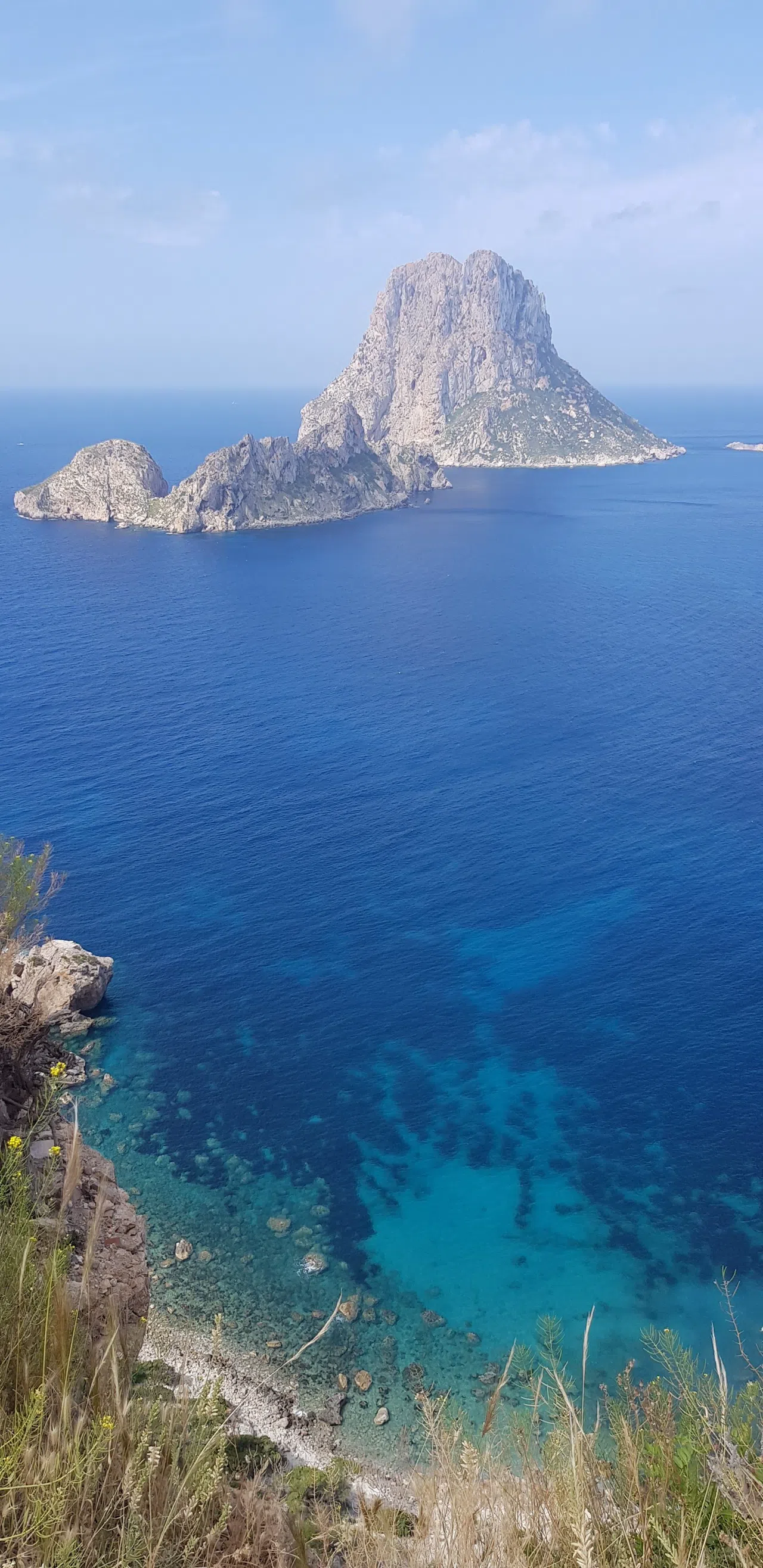

The road down to Cala d'Hort empties out in September. By six in the evening the heat has gone flat and sensible, the pines smell of resin rather than sunscreen, and the two islets offshore turn from grey to bronze while you sit and watch them do it. The tall one gets the name and the mythology; the low, flat one lying inshore of it is Es Vedranell, and it is the shape that ends up in most of the photographs people think are of something else.
What you are actually looking at
Es Vedrà and Es Vedranell (protected islets off the southwest coast, within the marine reserve) are two lumps of limestone about a kilometre offshore, and the whole experience is about where you stand or float, because you cannot go ashore. Landing is not permitted: these are wildlife reserve cliffs, with Eleonora's falcons nesting on them, so boats circle without disembarking and everyone else looks from land. Es Vedranell is the lower, flatter one, and from the coves it sits in front of its bigger neighbour, which is why almost every composition from this coast has two silhouettes in it rather than one.
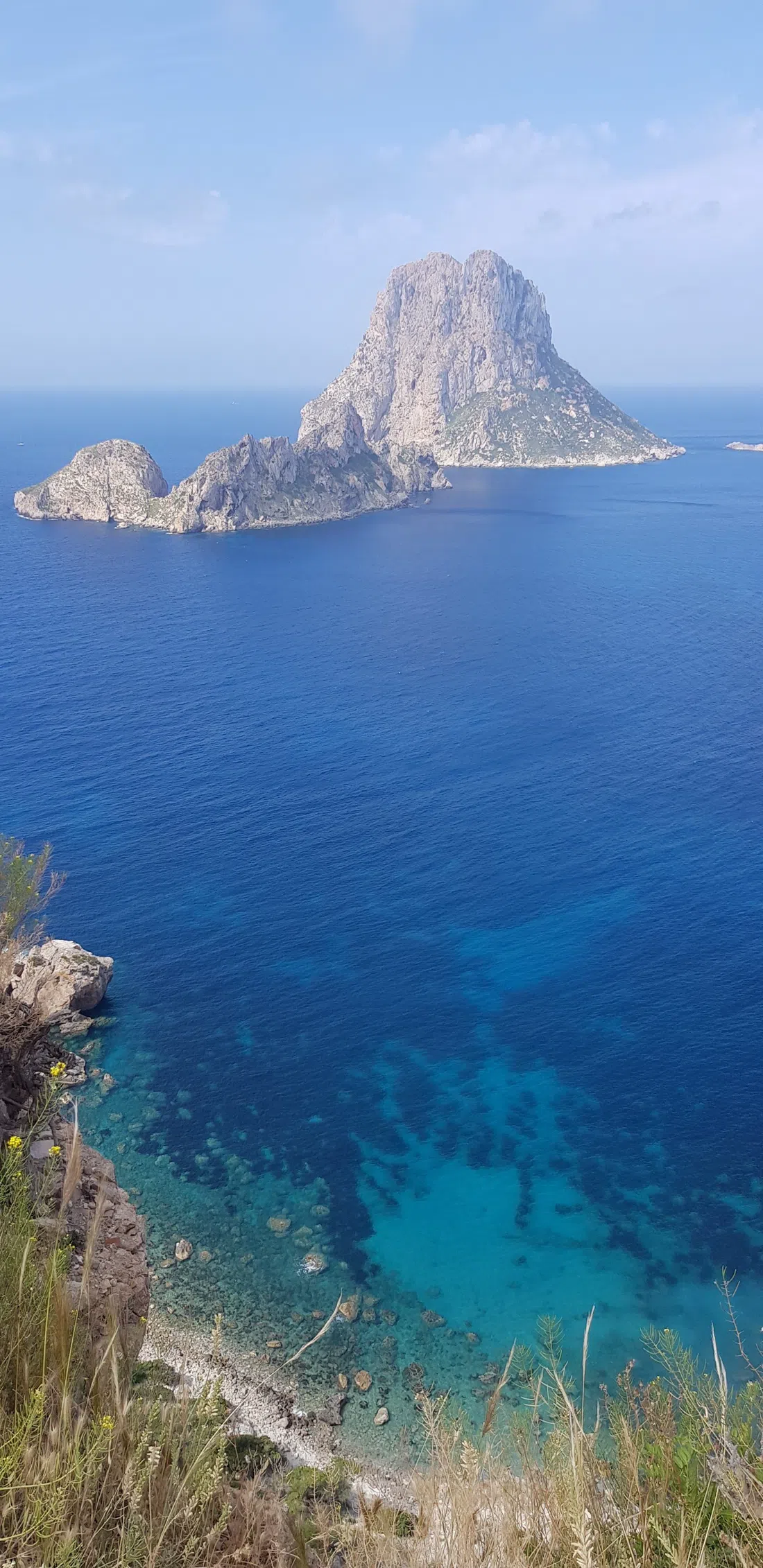
The no-landing rule matters less than it sounds. Viewing from land costs nothing at all, and the sea-level views from a boat start at roughly €35 per person. Either way, what you are buying is an angle and a time of day. Get those right and you have one of the quietest, most beautiful hours in the Mediterranean. Get them wrong and you are standing in a car park queue at two in the afternoon, looking into the sun.
Standing on the sand at Cala d'Hort
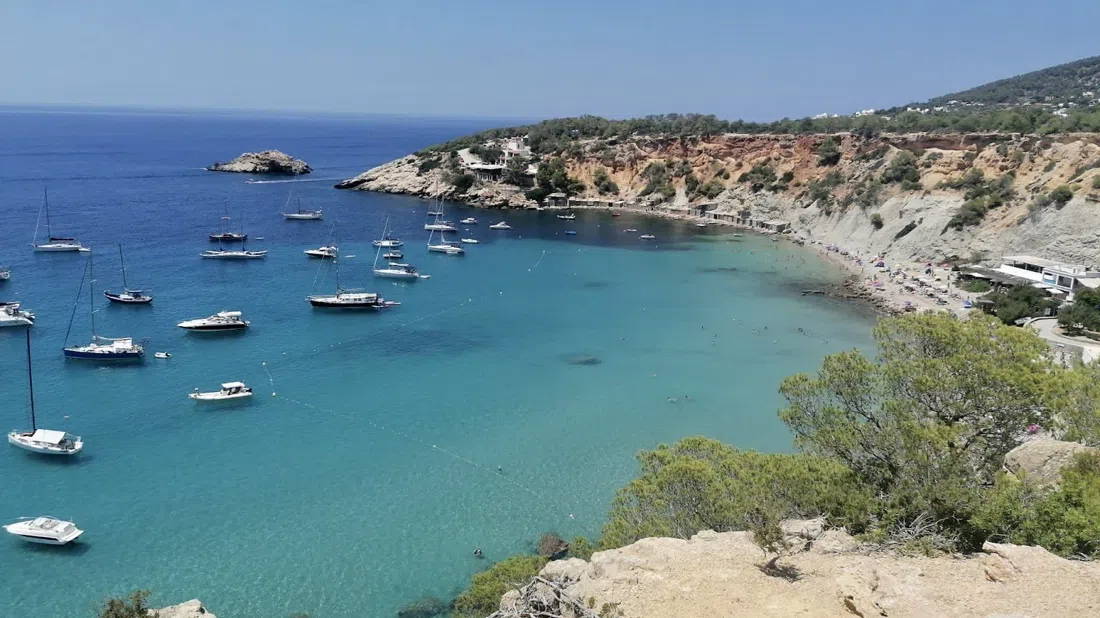
Cala d'Hort (the main cove directly opposite the islets) is the default place to see them now that the clifftop tower route above it has shut, and the front-on view from the sand is the best free one on the island. The beach is fully public, there is no door policy of any kind, and a large group is no problem on the sand itself. The constraint is the car park rather than access: it has been moving to paid, and through much of the 2026 season it has been closed or disrupted outright. Plan around that instead of hoping. Come by bus, or come very early. Before ten the cove is mostly locals swimming and the light is still on the islets rather than behind them. A sunbed and parasol set runs around €20 to €25 in season; in late September you often will not need one, because the pines throw usable shade by four.
Eating with the islets in front of you
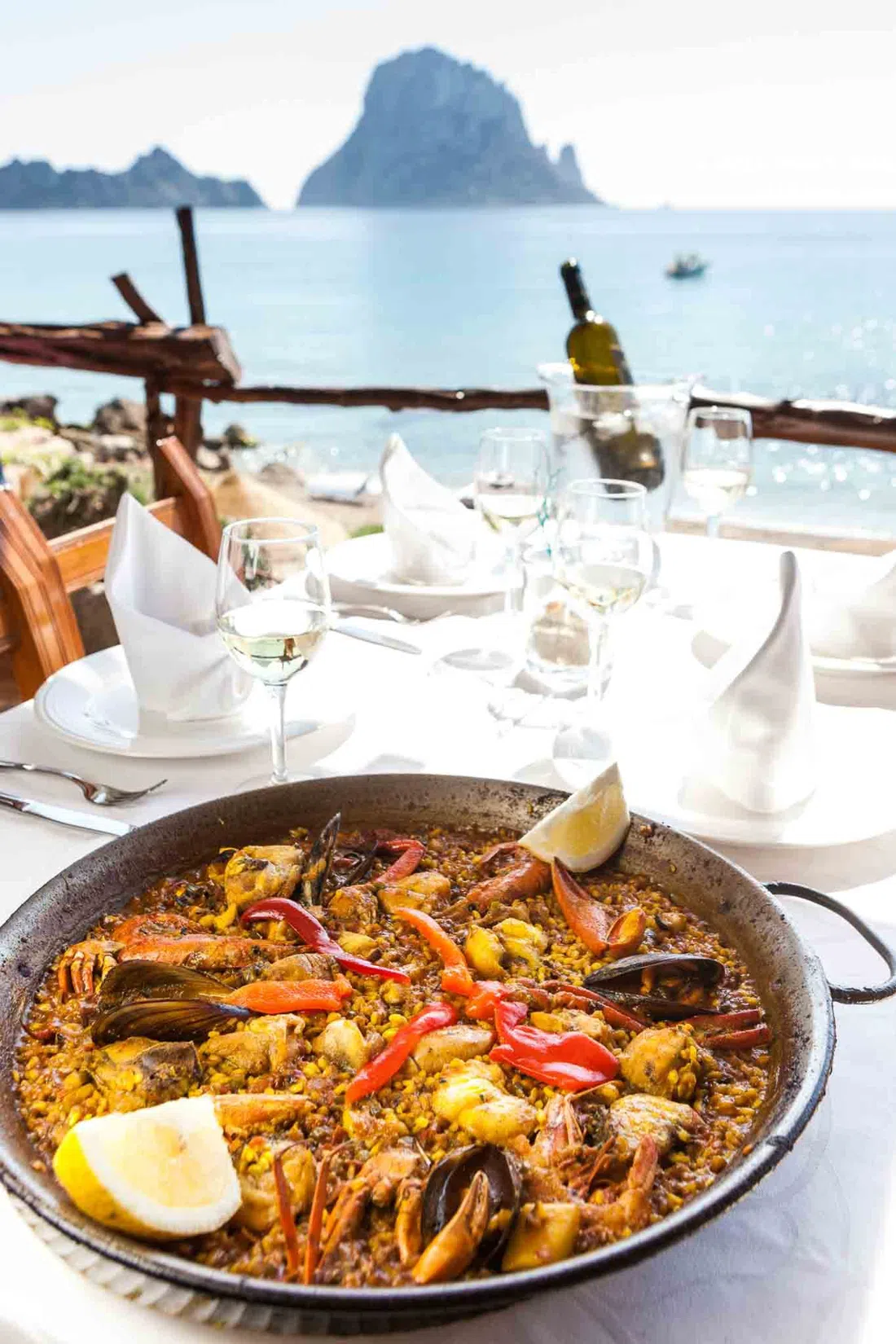
Es Boldado (on the cliff above Cala d'Hort, a few minutes' walk up from the sand) gives you the elevated angle the closed tower path used to, and the walk up is short enough to do on foot rather than driving. The Tur Torres family have run it for over thirty years and it is Michelin-listed, which here means careful local cooking rather than ceremony. Order the bullit de peix and let it take the time it takes. Mains land roughly between €30 and €55, rice dishes are priced per person, and the terrace fills for sunset. Groups are taken by reservation; if you are eight or more, telephone ahead rather than turning up hopefully.
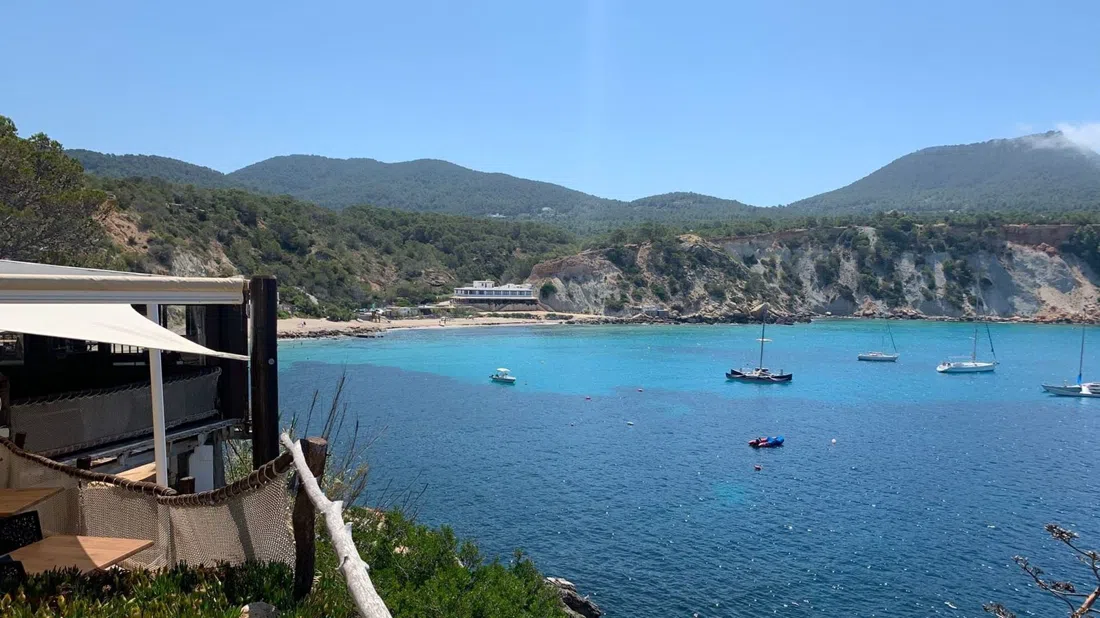
El Carmen (directly on the beach at Cala d'Hort) is the sea-level alternative and the more reliable September booking of the two, because it stays open daily through October when parts of the cove start winding down. It is family-run and happy with a group provided you have reserved, but the tables turn slowly at lunch and nobody is going to rush you, so do not book it as a quick stop between two other things. Rice dishes and fresh fish, about €35 to €60 a head. Es Boldado gives you the view from above; El Carmen gives you the postcard composition from the waterline with your feet more or less in the sand.
The quieter cove a few minutes along
Cala Carbó (the next cove north of Cala d'Hort, a couple of minutes away) is small, pebbled and clear, and it shows you the islets side-on rather than front-on: a less obvious picture and, in September, a much calmer one. It is public but physically tiny. Two or four people fit happily; twelve do not, and you will feel it. There are a few sunbeds in season, and it is the standard launch point for kayaks heading south along the cliffs.
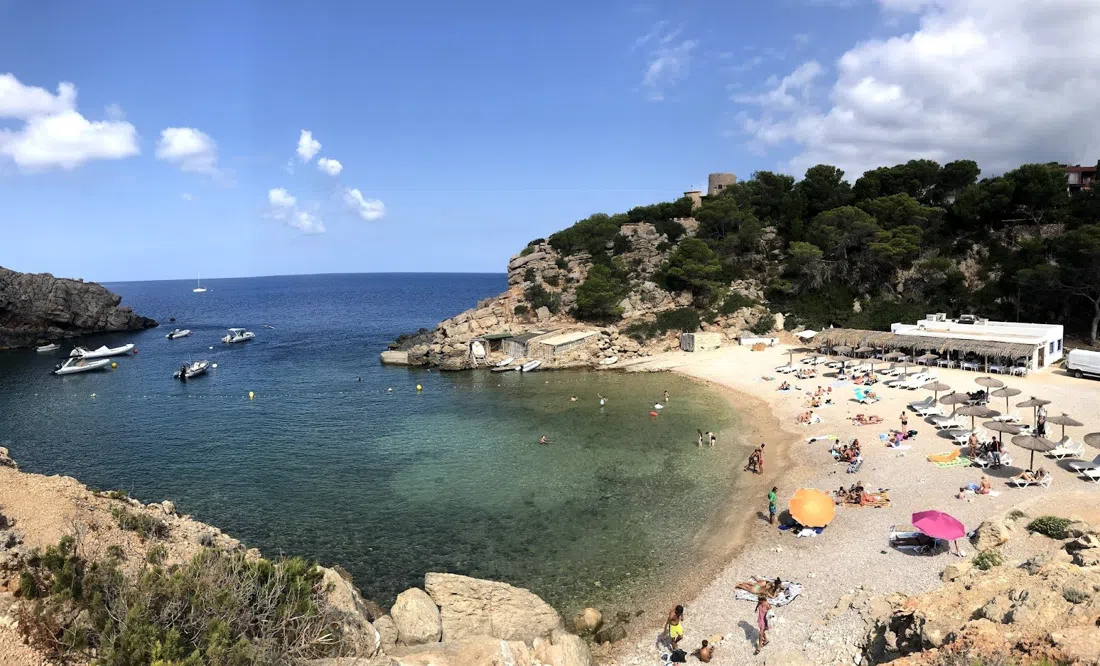
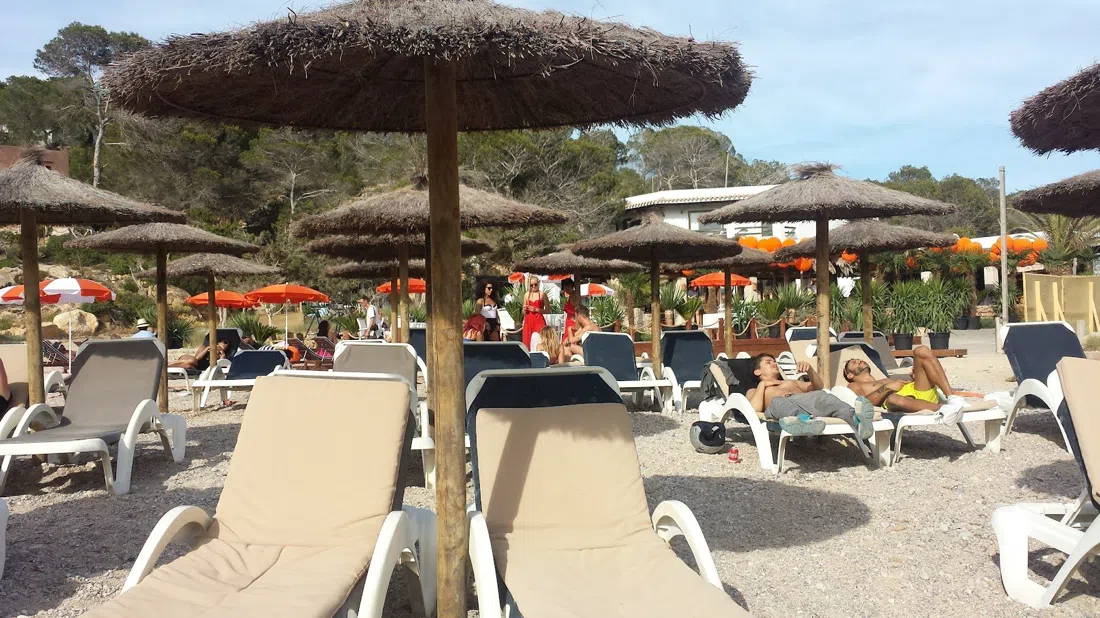
Restaurant Balneari Cala Carbó (on the cove itself) has been there since 1974 and is the least performative meal on this stretch of coast: oven-and-grill local fish, whole fish sold by weight, rices from about €28 per person, bullit de peix done properly. The room is small, so book well ahead in season and phone if you are a group. If the cliff-top terraces feel like an occasion you have to dress for, this is the counterweight.
Swimming into the old quarry
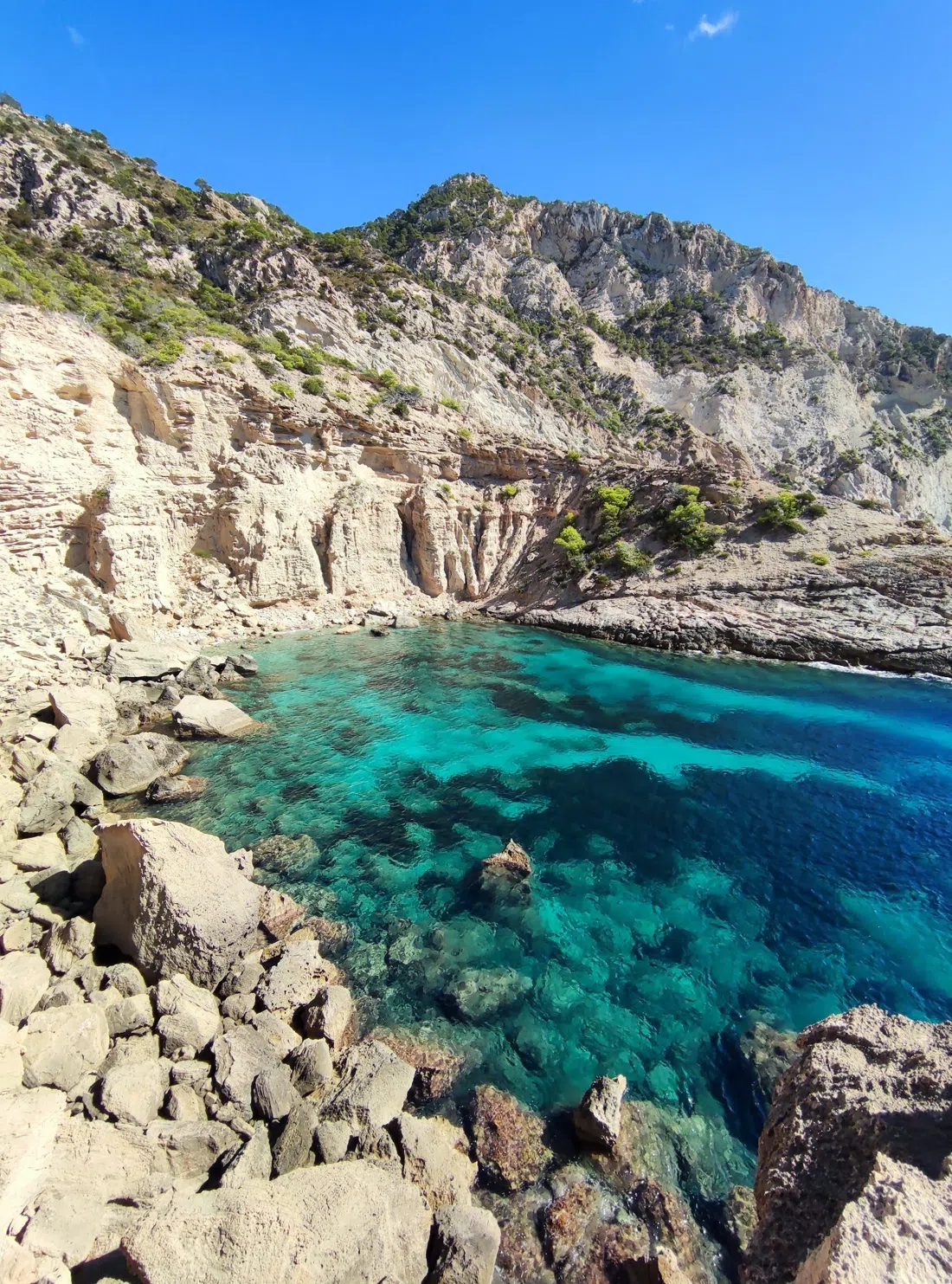
Sa Pedrera de Cala d'Hort, the abandoned sandstone quarry known locally as Atlantis (south along the cliffs from Cala Carbó), supplied the stone for the old town walls and has been a hiker's legend for years. The position in 2026 is awkward. The land route down runs from the Torre des Savinar side, where the estate owners closed access in February 2025, and it was still reported restricted in August 2026. The sea is the honest way in: by boat, or by kayak from Cala Carbó if you are a competent paddler and the forecast is flat. There is no shade, no facilities and no lifeguard, it is unsuitable for large or unfit groups, and rescues here are billed to the rescued. That is the local rule, and it is worth knowing before you set off in flip-flops.
Seeing Es Vedranell from the water
The only way to see the low islet head-on at sea level is to be on the water. Cruceros Portmany (sailing from the bay north of the inlets) runs a scheduled three-hour trip down the southwest coast past Cala Bassa, Comte, Cala Molí, Cala Vadella, Cala Carbó and Cala d'Hort, with a swim stop, at roughly €35 to €55 per person. It is a sightseeing operator rather than a party boat, families and groups are fine, and whole-boat charters exist. Its advantage in September is that it sidesteps the parking problem entirely: you never touch the Cala d'Hort car park at all.
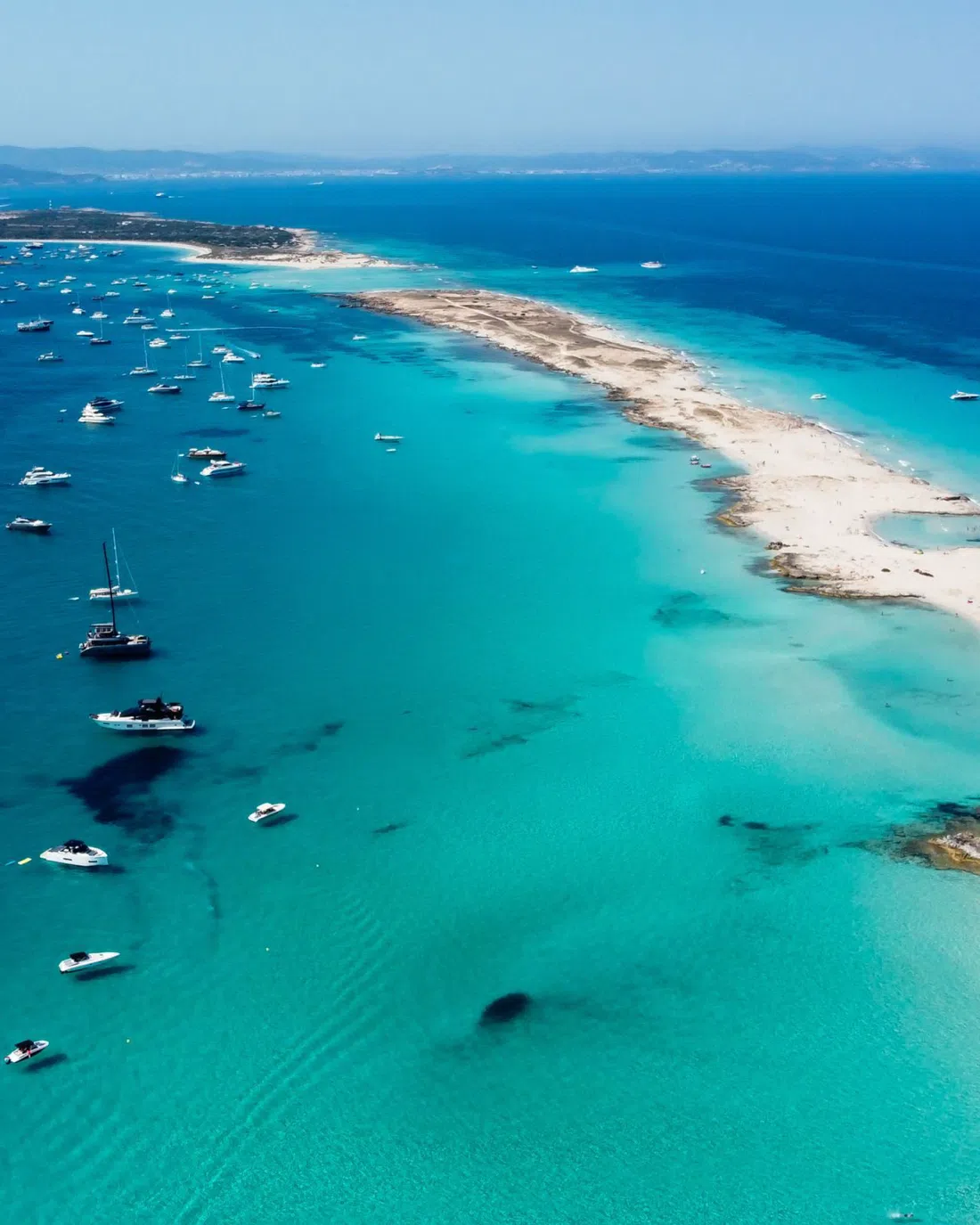
From the water the scale changes. The cliffs read as cliffs, the falcons are visible working the updraughts, and Es Vedranell stops being a backdrop and becomes a thing with its own surf line. Guided boat options on this attraction carry 460 traveller reviews between them, with the top-rated one at 4.9 out of 5 from 120 reviews, and they run seven days a week, so a September day with a bad forecast usually means moving to another day rather than losing the idea.
The long oblique view from Es Cubells
Es Cubells (clifftop hamlet on the southern flank, east of Cala d'Hort) is the twenty-minute answer rather than the hike. The gazebo beside the 1860s Carmelite church gives a long oblique view down the cliffs to the islets, free and always accessible. It is a residential village with almost no parking, so go in twos and fours, not in a convoy; park wherever the road allows well before the church and walk in. Late afternoon is best, when the light comes round the headland and the whole southern coastline lies out in front of you.
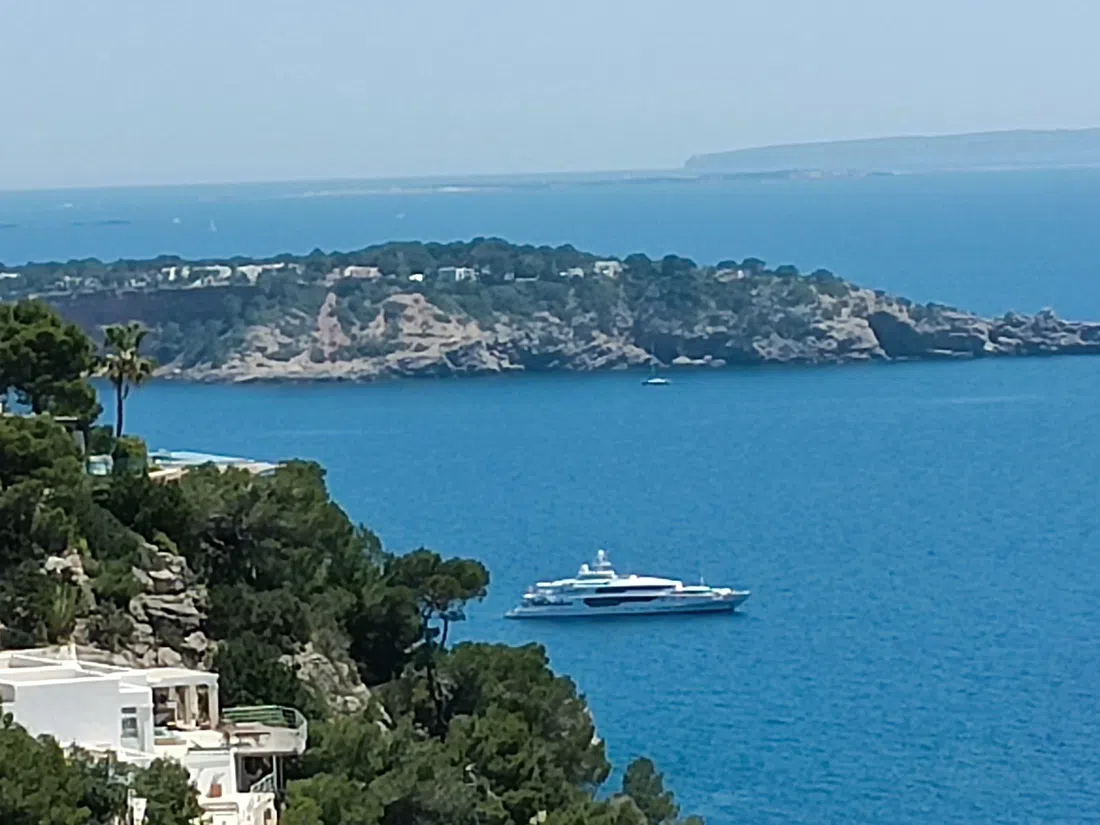
Driving the inlets road north
Cala Vadella (west-facing resort cove north of Cala Carbó) is what you fall back on when the Cala d'Hort car park defeats you. There is no view of the islets from here, but it is wide, sheltered, shallow and by some distance the easiest beach on this stretch for families and groups, with bars and restaurants along the front and sunbeds around €18 to €22 a set. It also makes the most sensible base for driving the inlets road, because everything else is fifteen minutes away in one direction or the other.
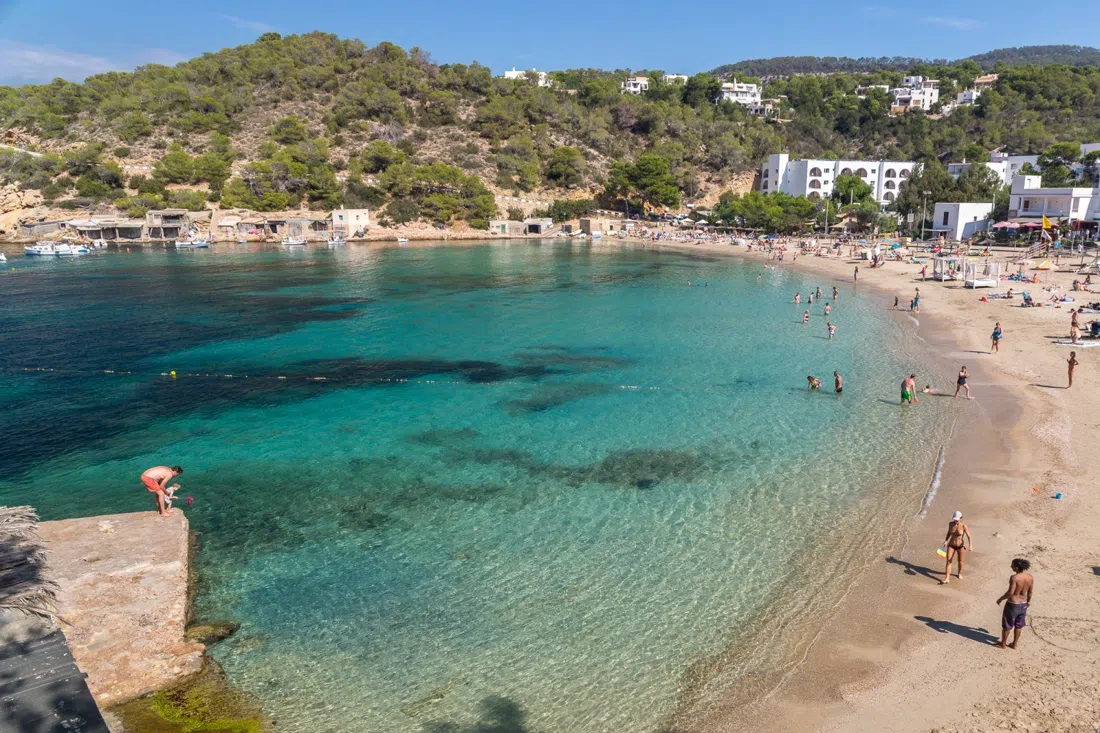
Cala Molí (tucked between Cala Vadella and Cala Tarida) is consistently the emptiest of the three, a small pebble cove with kayak rental on the shore and a restaurant above that takes groups by booking. The beach itself holds very few people. It is a good mid-afternoon stop, the gap between the Es Vedrà coves and the sunset.
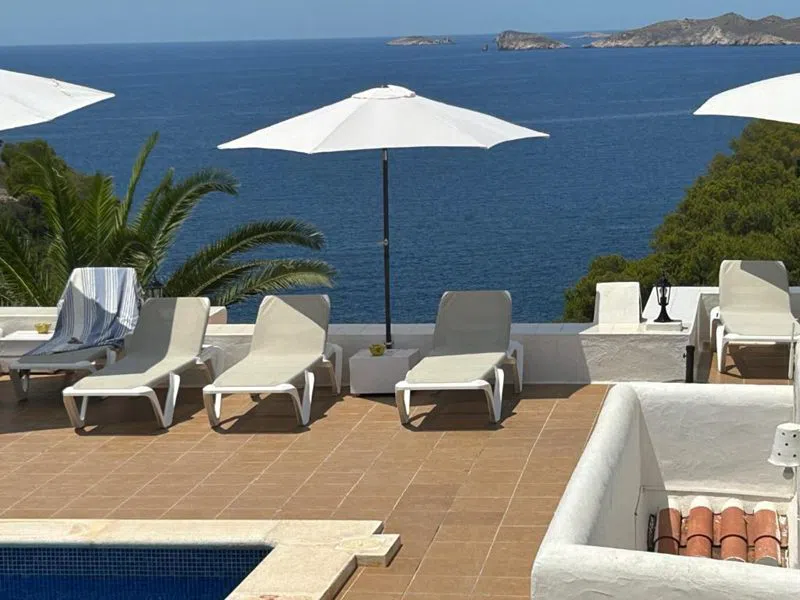
El Silencio (on the coast road north of Cala Molí) is the one high-end room here, Mauro Colagreco's kitchen across three distinct spaces, with a music policy that stays Balearic rather than mainstream. Expect €80 to €150 a head with drinks. It is reservation-led and does take groups, though a booked table is the only way in; you cannot arrive with twelve people and see what happens.
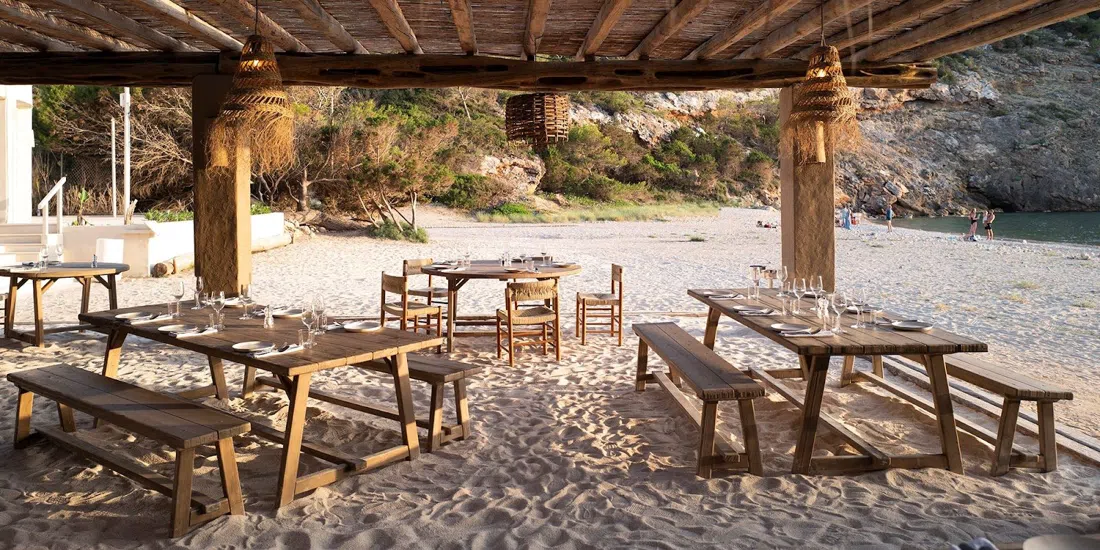
Ending the day above Comte
Platges de Comte (Cala Comte, at the northern end of the inlets) gives you a different picture entirely, offshore islets and a long rocky headland rather than the big rock, and it is the island's best-known sunset beach for good reason. Groups spread out easily along the rocks, though the specific sunset perches are contested. The upper car park is around €10 in high season, with free parking five to ten minutes' walk away; bus L4 from Sant Antoni drops at the upper car park and removes the argument altogether.
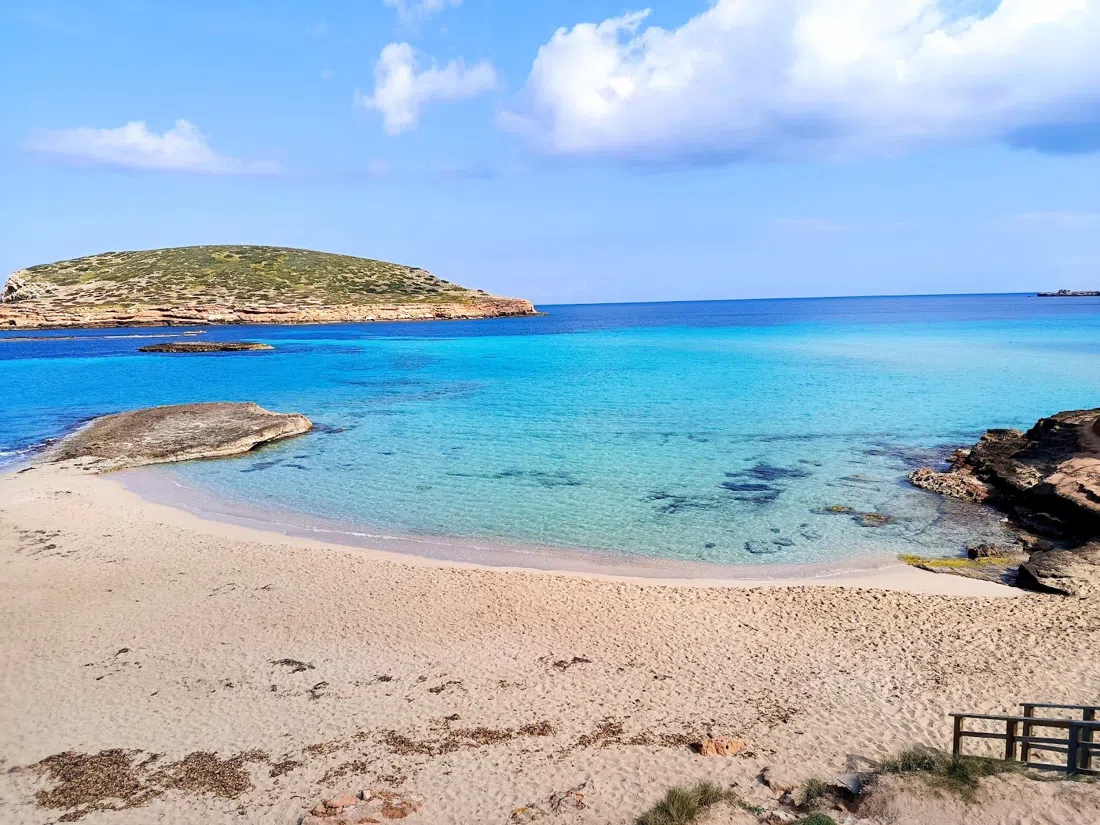
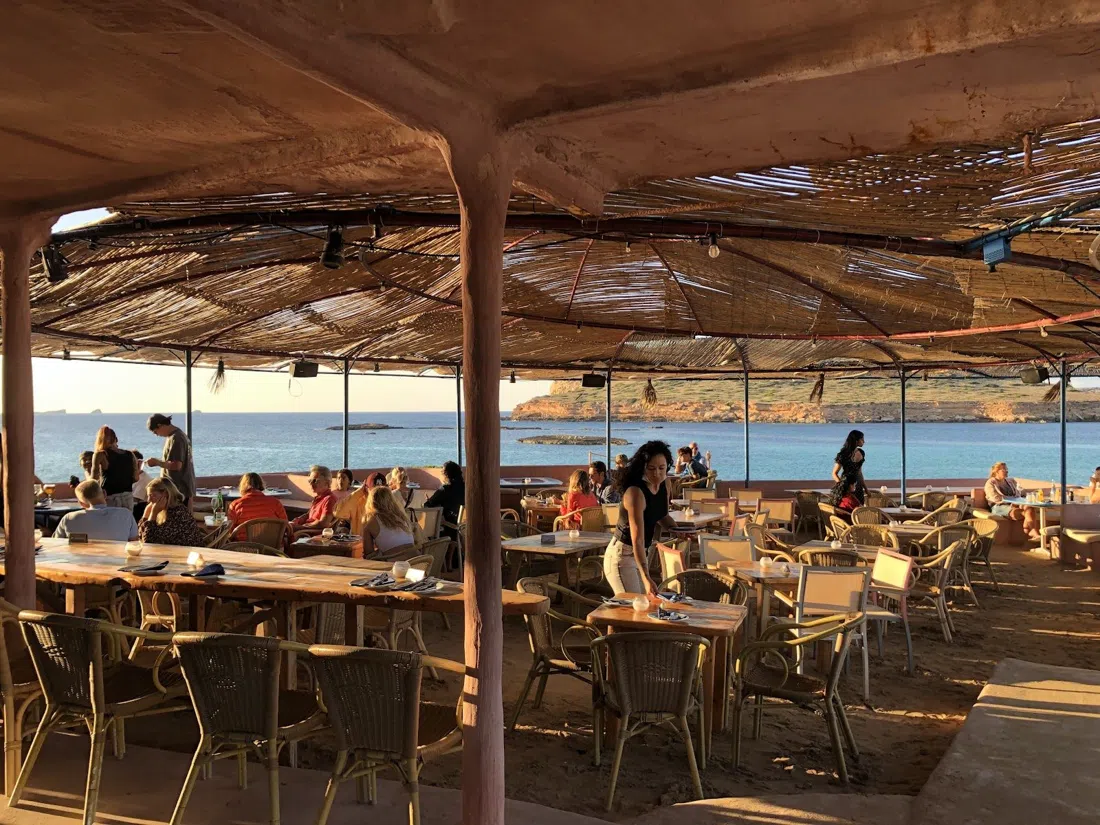
Sunset Ashram (above the rocks at Comte) is open daily from mid-morning until midnight, self-service until early evening and table service after, with mains roughly €25 to €45 and cocktails €15 to €18. Arrive for the last hour of light and eat there, rather than turning up hungry at nine when the tables have gone. Sunset tables need booking.
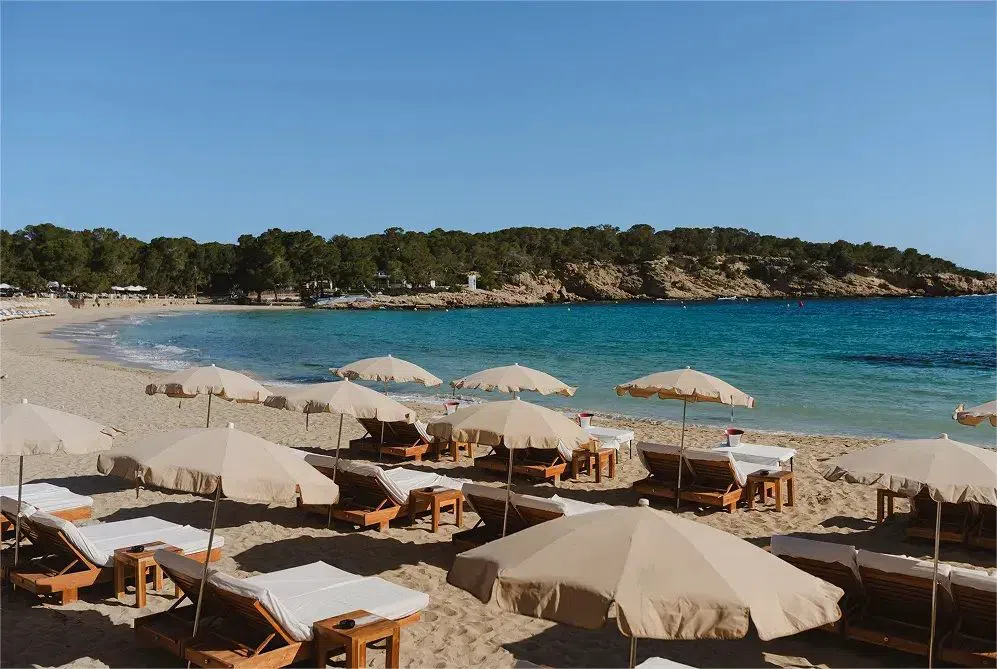
CBbC Cala Bassa Beach Club (Cala Bassa, north again) is the most organised venue on this coast and the safe September booking when smaller chiringuitos start shutting: multiple restaurants, cabana and bed reservations from roughly €40, restaurants €40 to €80 a head, and a boat shuttle from Sant Antoni so you can skip the road. Its restaurants run into mid-October and the beach bar later still.
How long it takes and when to go each day
As a half day, this is Cala d'Hort plus one meal: three hours, comfortably. As a full day it is the inlets road end to end, Cala d'Hort in the morning, Cala Carbó or Cala Molí for a swim, Comte for the last of the light, which comes to about eight hours including two sit-down stops and no hurrying. The boat trip is three hours plus travel to and from the harbour.
Mornings belong to the islets. Before eleven the sun is behind you, the water off Cala d'Hort is glass, and the coves are almost empty. Midday is the weak part of the day here: hot, crowded, flat light, and the parking at its worst. From about five it all comes back. The rock warms up in colour, the terraces fill, and the last ninety minutes are the reason to be on this coast at all. Weekends are noticeably busier at Cala d'Hort and Comte than midweek, so if you can choose, choose Tuesday to Thursday.
Booking ahead or simply turning up
The islets themselves cost nothing and need no ticket; there is no door, no queue and nothing to buy. Everything around them does need planning. Sunset tables at the cliff terraces and at Comte should be reserved days ahead in September, group tables of eight or more need a phone call rather than an online form, and the boat trips sell by the seat, so lock in a specific date and a specific departure instead of walking up to the harbour. A guided option exists if you would rather not drive at all, and it runs seven days a week, which makes rescheduling around weather straightforward.
Rules worth respecting
No landing on either islet, for any reason: it is a reserve with nesting cliffs, and the boats that circle them are doing what they are permitted to do. Do not plan a land descent to the quarry on the assumption the old path has reopened; as of August 2026 it was still reported restricted. Take water, take a hat, and take your rubbish back up the hill, because none of these coves have the infrastructure of a resort beach.
Is it worth it
Yes, with one condition: go early or go late, and never in the middle of the day. Front-on from the sand at Cala d'Hort it is one of the great free views in the Mediterranean, and in September you get it without the July crush. It suits couples, walkers, photographers and anyone happy to spend two hours doing very little. It suits large groups less well: Cala Carbó and Es Cubells simply cannot absorb them, and Cala Vadella, Comte or Cala Bassa are the honest answers if there are ten of you. If you cannot face the parking, take the boat. It is the only way to see Es Vedranell from the front at sea level, which arguably makes it the better version anyway.
Best time to go in September
Early September still carries August's crowds and August's road traffic, and the sea is at its warmest: good for the quarry swim, less good for parking. From around the middle of the month it tips. The light lengthens and softens, the coves quieten sharply midweek, and the water stays warm enough to swim without thinking about it. By the last week some of the smaller beach operations start closing, which is exactly when the venues that run into October earn their keep. Sunset moves earlier across the month, so check the actual time on the day rather than assuming eight o'clock, and give yourself an hour before it on the rocks or at a booked table. Wind is the one variable that matters for the boat: a westerly makes the swim stop uncomfortable, and the operators will tell you honestly if the day is wrong.
Practical notes
Transport. A car gives you the inlets road, which is the point of the drive, but Cala d'Hort's car park has been closed or disrupted for much of 2026, so for that cove specifically the bus is the low-stress option, and bus L4 from Sant Antoni drops at Comte's upper car park. The Cala Bassa boat shuttle from Sant Antoni is another way to skip the road entirely. The roads down to the coves are narrow and steep; cyclists should expect a real climb back out of Cala d'Hort and Cala Carbó in the afternoon heat.
Cash and cards. Cards work everywhere you will eat, but carry some cash for parking meters and sunbed attendants.
Budget. A free day is entirely possible: the beaches, the Es Cubells gazebo and the view itself cost nothing. A realistic middle day is roughly €60 to €90 per person with one proper lunch, a sunbed and parking. Add the boat at about €35 to €55, or go up to €80 to €150 a head if you are eating at the high-end room on the coast road.
Where to stay. Basing yourself anywhere between Cala Vadella and Sant Josep puts every cove here within twenty minutes; compare rooms and dates through Ibiza hotel search, and the wider Ibiza guide covers the rest of the island once you have had your fill of looking at two rocks in the sea.